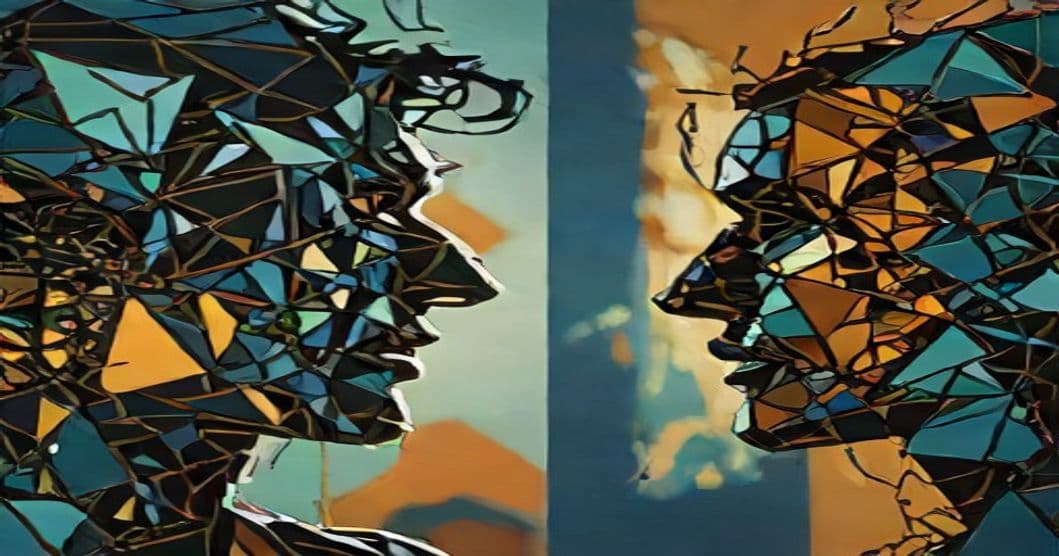
The 2016 election broke a lot of friendships. Not because people disagreed — people have always disagreed — but because there was no shared arena left where disagreement could actually go anywhere useful. Two people, same country, completely different information diets. Both convinced the other was living in a fantasy. Neither wrong that something had gone badly off the rails.
That gap hasn't closed. It's widened. And the weird thing is: we've spent the last decade building better and better tools for talking, and somehow ended up with a world where fewer important conversations actually happen.
The Fragmentation Problem Isn't About Bad People
Here's what gets missed when people diagnose the polarization crisis: it's not that humans got dumber or meaner. It's that the architecture changed.
When there were three TV channels, everyone watched the same news. Not because it was better news — it wasn't — but because the shared exposure created a rough common floor. You could argue about what it meant. At least you agreed on what happened.
Now? You can curate your entire information environment to confirm everything you already believe. The algorithm doesn't care about your epistemics. It cares about your engagement. And nothing drives engagement like the feeling that the other side is insane.
This isn't a media critique. It's a coordination problem. When people can't agree on basic facts, they can't coordinate on solutions. When coordination fails, institutions erode. When institutions erode, trust collapses. You can see where this goes.
The question isn't "why did people get polarized?" The question is: what would it take to build systems that make better dialogue structurally easier?
Podcasts Were Supposed to Fix This (Partially)
There's a reason Joe Rogan's interview with Bernie Sanders hit 10 million views and sparked more genuine cross-tribal conversation than most political debates. Or why Lex Fridman's four-hour sit-down with Elon Musk — whatever you think of either of them — surfaced questions about AI risk that had barely pierced mainstream consciousness before.
Long-form audio changed something real. It's harder to strawman someone across three hours. You actually hear how they think. Nuance sneaks back in when there's enough room for it.
But here's the structural problem with podcasts as a sensemaking tool: the host decides everything. What gets explored, who gets invited, which topics get a second episode, which ones get dropped. The audience is passive. Millions of people might want to hear a specific conversation — a specific question asked, a specific person challenged — but there's no mechanism for that demand to actually reach the people making the decisions.
You're a listener. You have an opinion. That opinion goes... where, exactly? The replies section? A Reddit thread that the host will never read?
The signal is there. It's just diffuse. Unstructured. Invisible.
The Gap Between "Having Opinions" and "Shaping Discourse"
Think about the last time you watched a debate or a podcast and thought: they're not asking the right question. Or: these two people need to talk, and nobody is making it happen. Or: this topic keeps coming up in every conversation I'm in, but I can't find anyone actually digging into it seriously.
That feeling is a real thing. It's diffuse public demand for a specific kind of dialogue. And right now, it has nowhere to go.
The people who shape public conversation — podcast hosts, journalists, conference organizers — are flying partially blind. They have download numbers and Twitter followers. They don't have a clear signal of what conversations their audience actually wants to happen, who they want to hear from, or what questions matter most right now.
Meanwhile, the audience is sitting on a huge amount of collective intelligence about what would actually be valuable. That intelligence is wasted.
This is the coordination failure at the heart of modern discourse: the people who want better dialogue and the people who produce dialogue are barely in communication with each other.
What Structured Demand Actually Changes
Imagine if a podcast host could look at a dashboard and see: 40,000 of their listeners want them to interview a specific economist. 12,000 people have voted that the most important question to ask is about housing supply. 800 people have put actual money behind the request — not as a donation, but as a signal of how much it matters to them.
That's not just useful data. It changes the dynamics of what gets made.
It also changes the listener's relationship to the conversation. You're not passive anymore. You voted. You nominated. Maybe you contributed to make it happen. When the conversation does happen, it feels different — it's yours in some real sense, not just content that was served to you.
This is the underlying logic behind what dLogos is building. Not a content platform. Not another place to host podcasts. A coordination layer — infrastructure for turning diffuse fan demand into structured signal that actually reaches the people who can act on it.
Fans can vote on topics. Nominate guests. Crowdfund specific conversations they want to exist. Hosts get a clearer picture of what their audience actually wants. The conversations that happen aren't just whoever got booked — they're the conversations a community actively chose.
It's a small structural change. But small structural changes are how coordination problems get solved.
The Conversations We Need Are Sitting in Draft
There are conversations that could shift things — actually shift things — that aren't happening yet. Not because nobody wants them. Because nobody has made it easy enough for the demand to become visible, and nobody has given that demand a place to go.
Someone out there wants to hear a serious conversation between the most thoughtful voices on opposing sides of a contested question. Someone wants a specific expert challenged on a specific claim. Someone wants a long-form dialogue that doesn't exist yet — and they're not alone; thousands of people want the same thing, they just don't know each other.
The fragmentation of our information environment is a hard problem. Nobody's going to solve it with one platform or one product. But part of the answer — maybe a big part — is building infrastructure that makes good dialogue easier to demand, easier to fund, and easier to find.
If you've ever finished a podcast episode and thought I wish they'd asked the harder question — or this conversation needs a sequel — or why won't these two people just sit down together — you already understand the problem.
Now there's somewhere to put that energy.
Join dLogos and start shaping the conversations that matter.
Vote on a podcast you love.
Open the app
Writing about how structured audience demand reshapes podcasting, media, and discourse — one nominated conversation at a time.